
Geländewagen: The Meaning and History of the Name
Before it was a badge, it was a description. Geländewagen is the word Mercedes-Benz used to name a vehicle that did not yet have an image to live up to, only a job to do. Nearly five decades later, the abbreviation is known on every continent and the original word has become shorthand for a very specific kind of vehicle. At Expedition Motor Company we have restored more than 175 of them, and the name is where every one of those builds begins.
What Does Geländewagen Mean?
Geländewagen is a German compound word. Gelände translates to terrain, grounds, or open country, and Wagen translates to vehicle. Taken together, the name means cross-country vehicle or terrain vehicle. It is a literal description rather than a marketing invention, which is consistent with how the truck itself was conceived: a working machine named for what it does.
The word is properly written with an umlaut, Geländewagen, though English-language usage commonly drops it. Mercedes-Benz itself shortened the name almost immediately in conversation and eventually in official nomenclature, which is how the world arrived at the two-letter designation it knows today.
The Origin of the Geländewagen
Development began in the early 1970s as a cooperation between Daimler-Benz and Steyr-Daimler-Puch of Graz, Austria. The brief called for a vehicle that could serve military and utility roles while remaining civilized enough for civilian sale. Production began in Graz in 1979, and the vehicle has been built there ever since, an unusual continuity in an industry where platforms and plants rarely stay together for long.
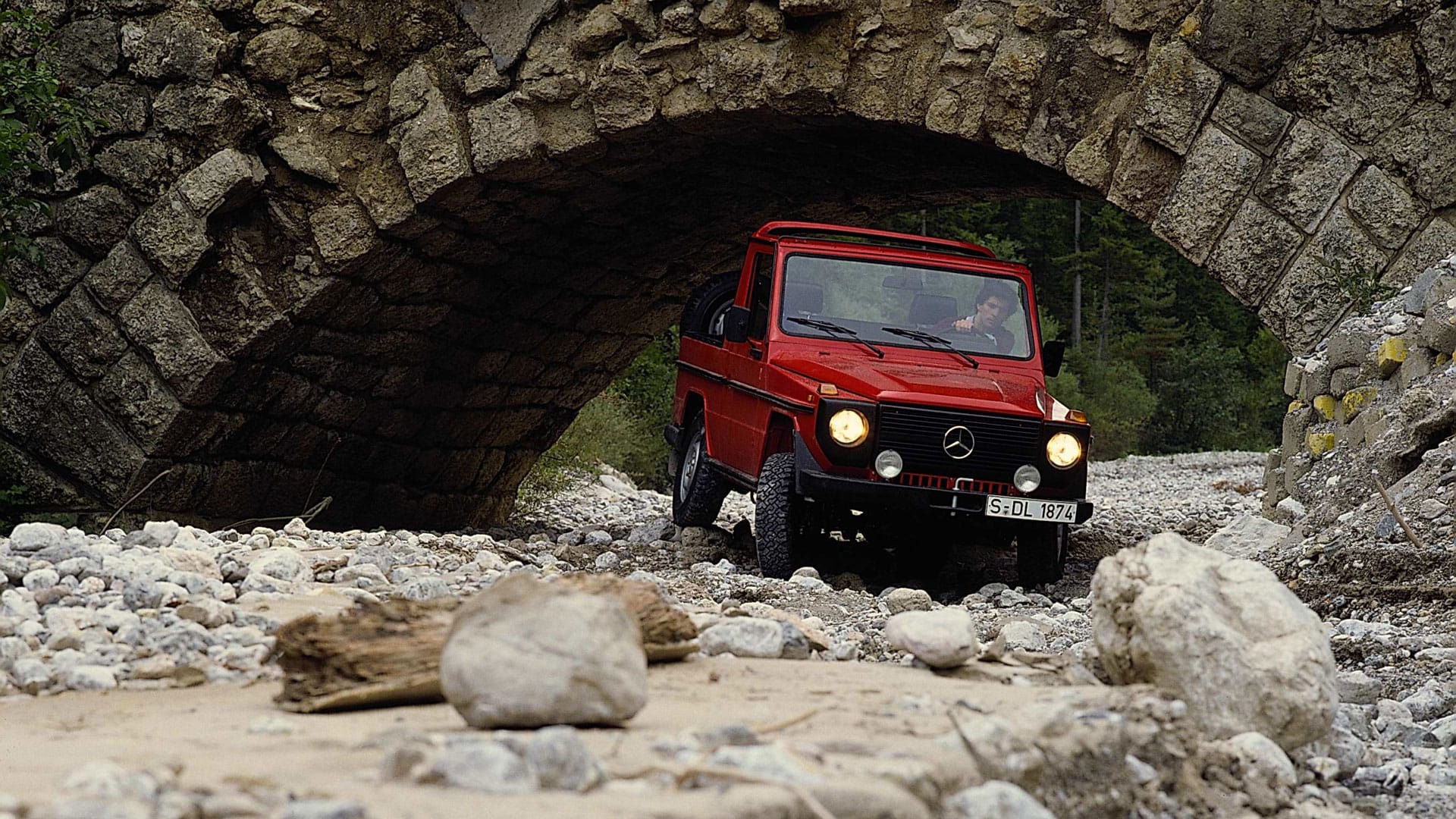
Photo Credit: Retro Motor
The first generation carried the internal designation W460. It established the format that still defines the truck: a ladder frame, solid axles, a boxy steel body with near-vertical glass, and drivetrain hardware chosen for durability over refinement. Civilian sales grew through the 1980s, but the military g wagon mission remained central to the program, and military contracts shaped the engineering decisions that made the platform what it is.
From Geländewagen to G-Class
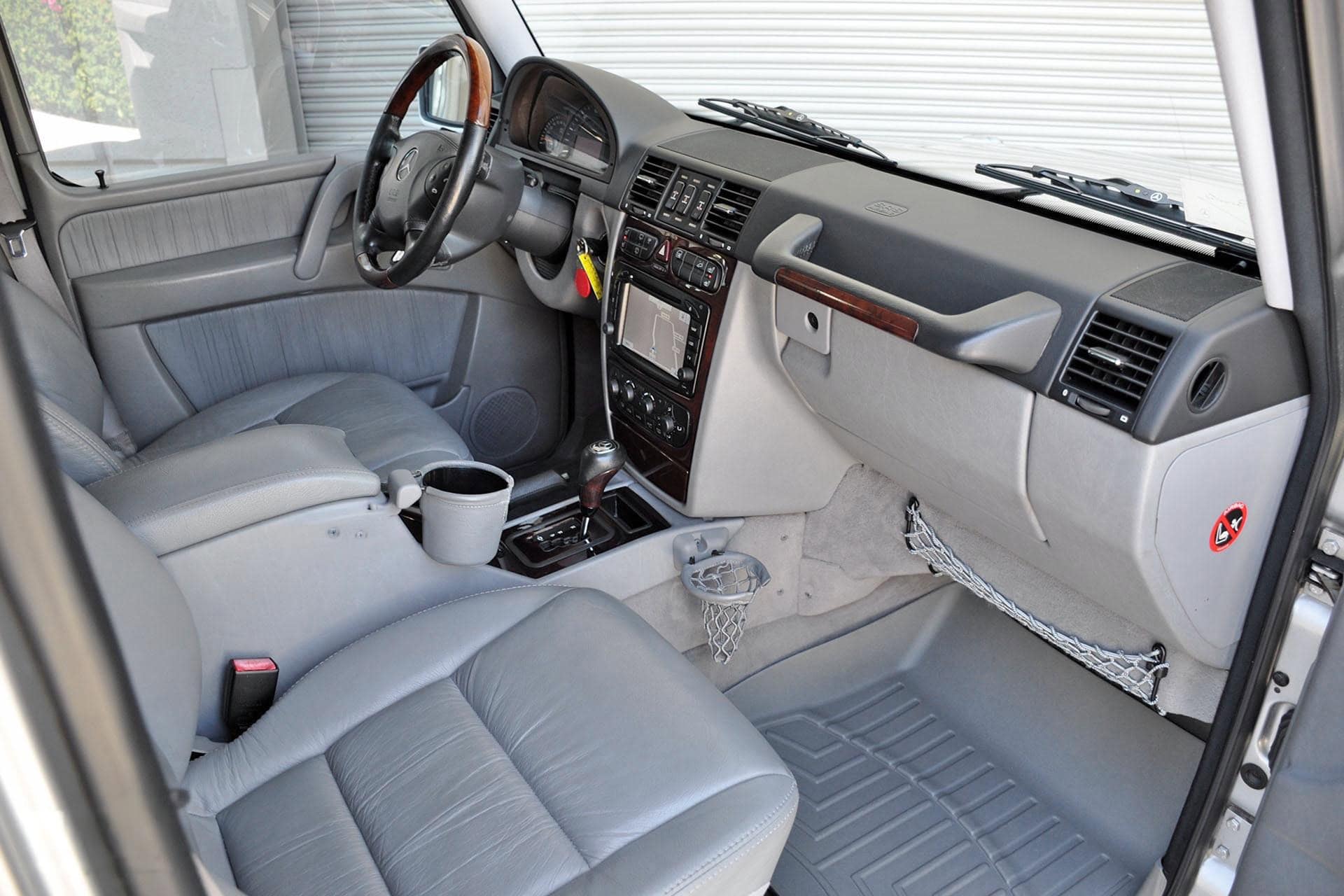
Photo Credit: Driving Emotion
As the lineup matured, Mercedes-Benz formalized the abbreviation. The G designation appeared on civilian models from the beginning, and in the 1990s the company brought the truck into its modern naming structure as the G-Class. By then the platform had split into two distinct lines. The W463 carried the civilian range upmarket with a more appointed interior and, in time, V8 power in models such as the G500 cabriolet. The W461 continued in parallel as the working chassis, built for governments, aid organizations, and armed forces that needed the original formula left intact.
That split matters for anyone trying to understand the family tree. The same name covers NATO troop carriers, and hand-finished luxury vehicles, and the differences between them come down to platform and era. A full breakdown of each variant and generation is available in our G Class Gelandewagen model reference, which traces the line from the first W460 to the current production trucks.
The Wolf: The Military Geländewagen
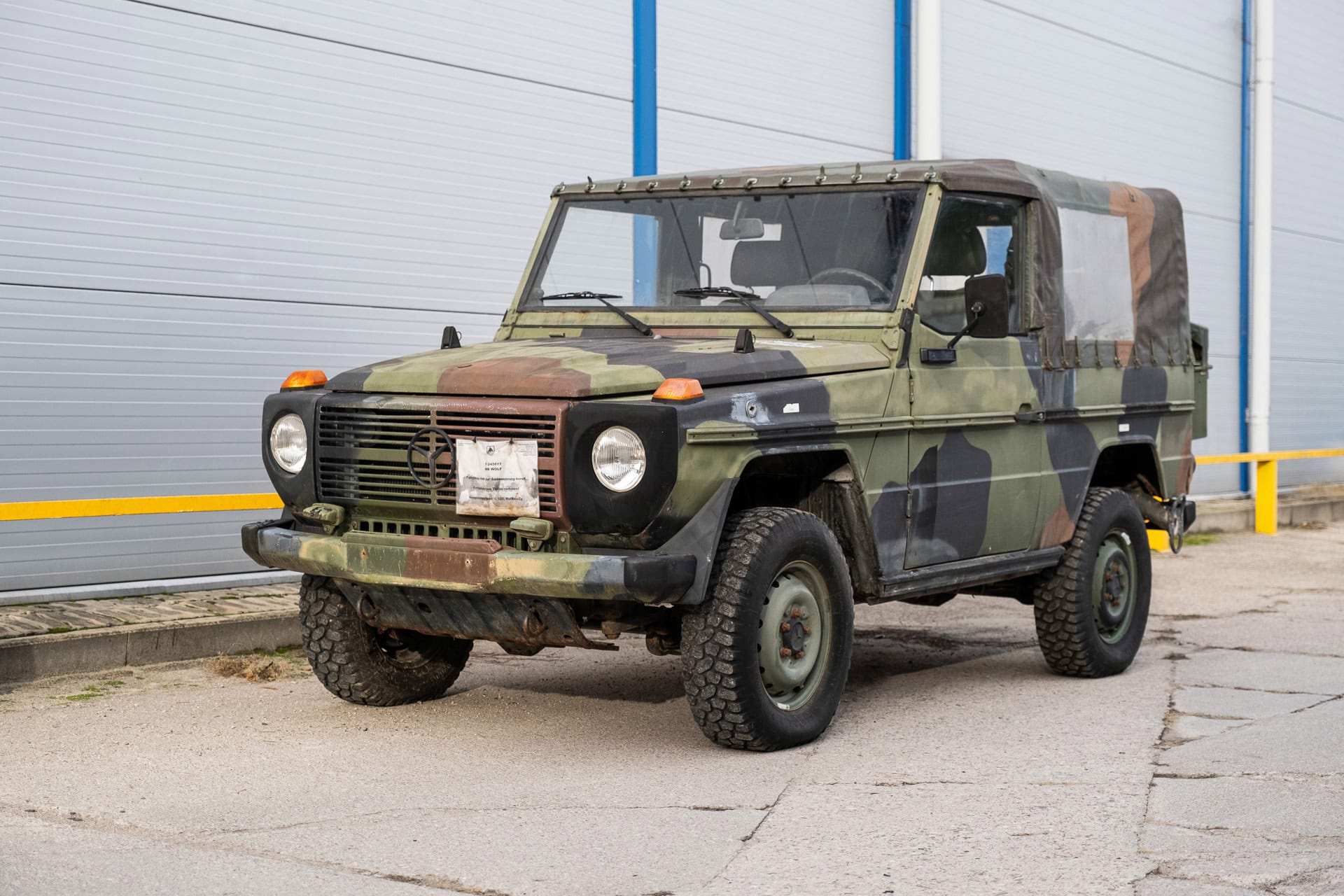
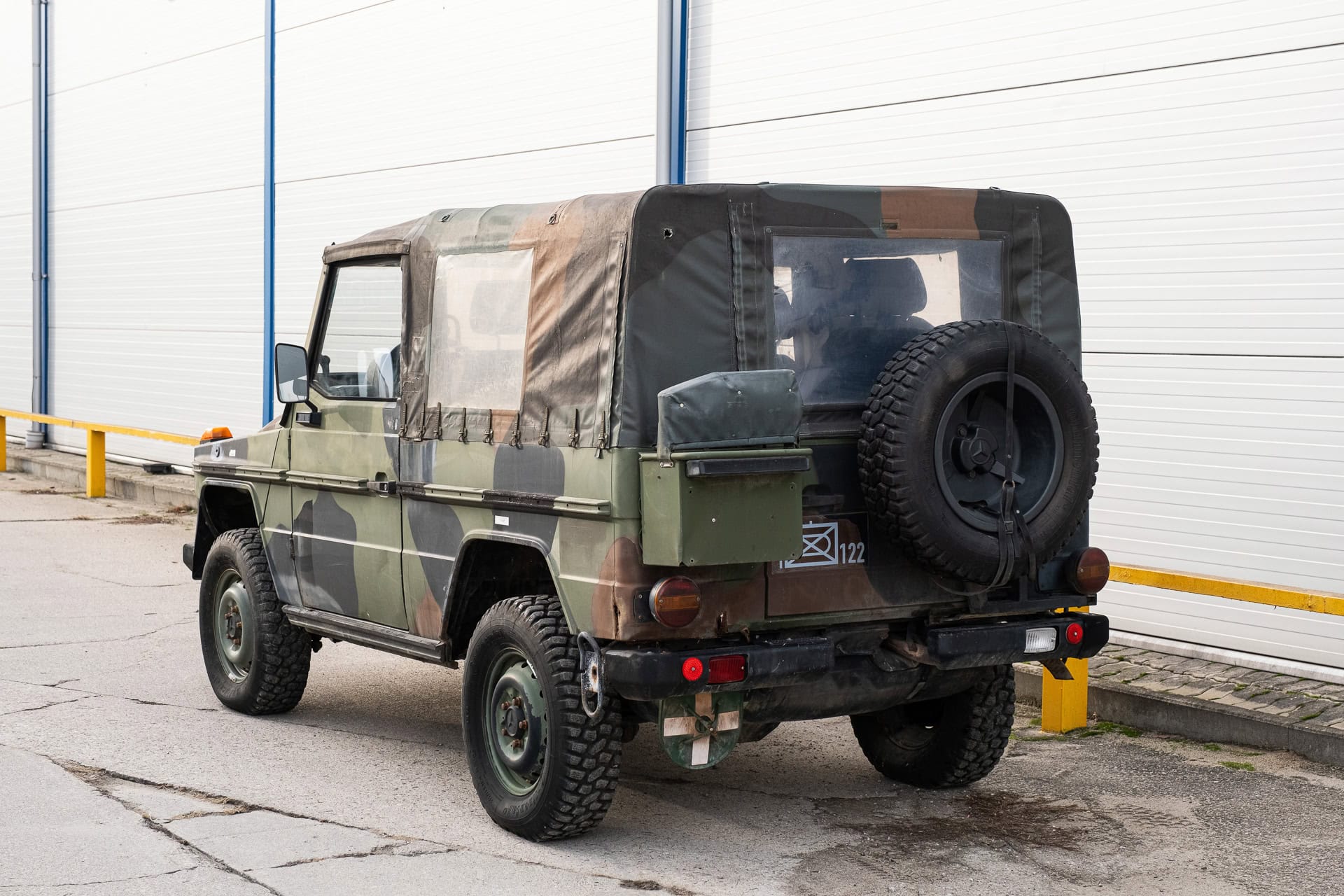
In 1991 the German Bundeswehr adopted the W461 in 250GD specification and gave it a name of its own: the Wolf. These trucks were specified with the OM602 diesel, manual transmission, and soft-top bodies. They were built to a standard that prioritized field repairability and service life over comfort.
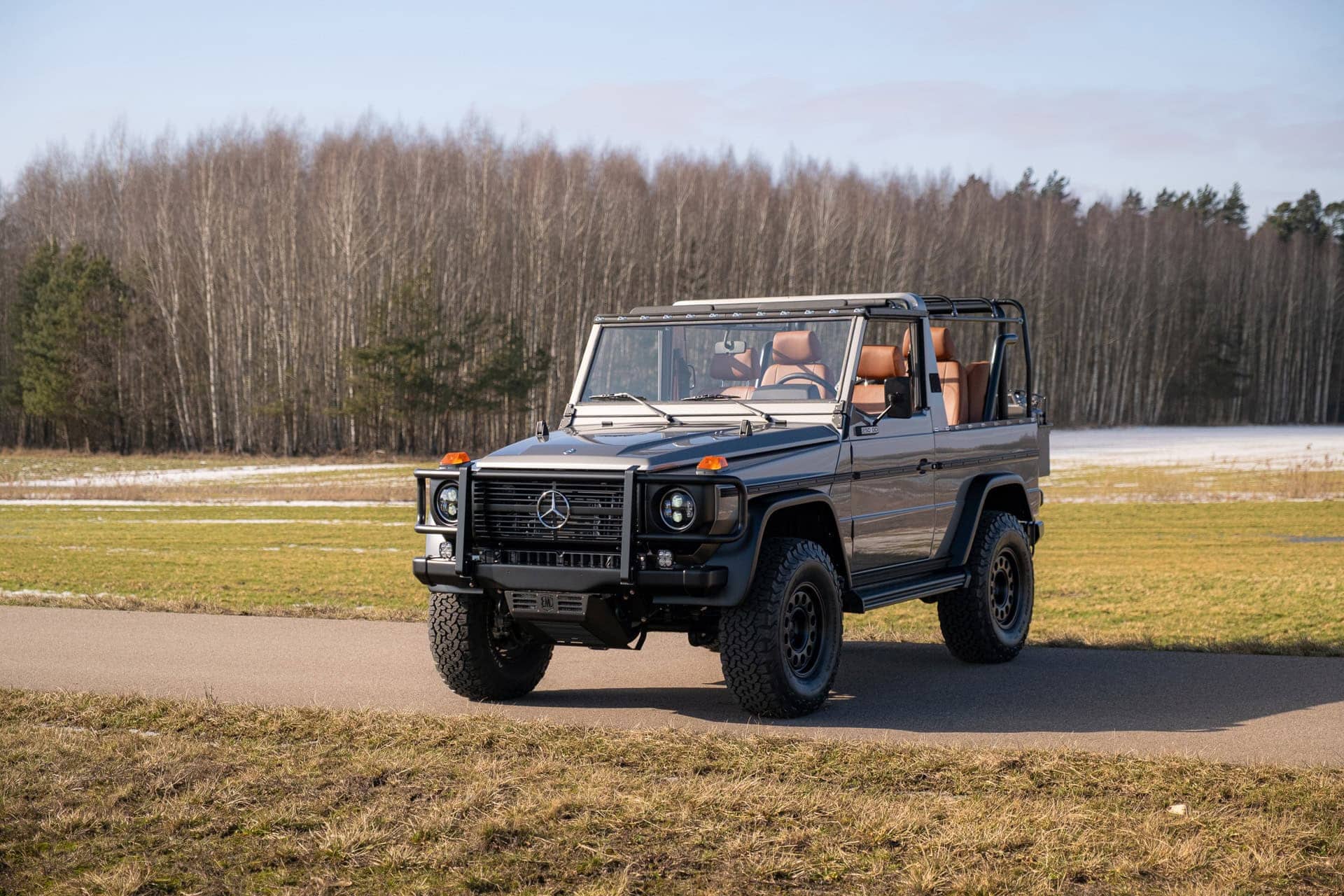
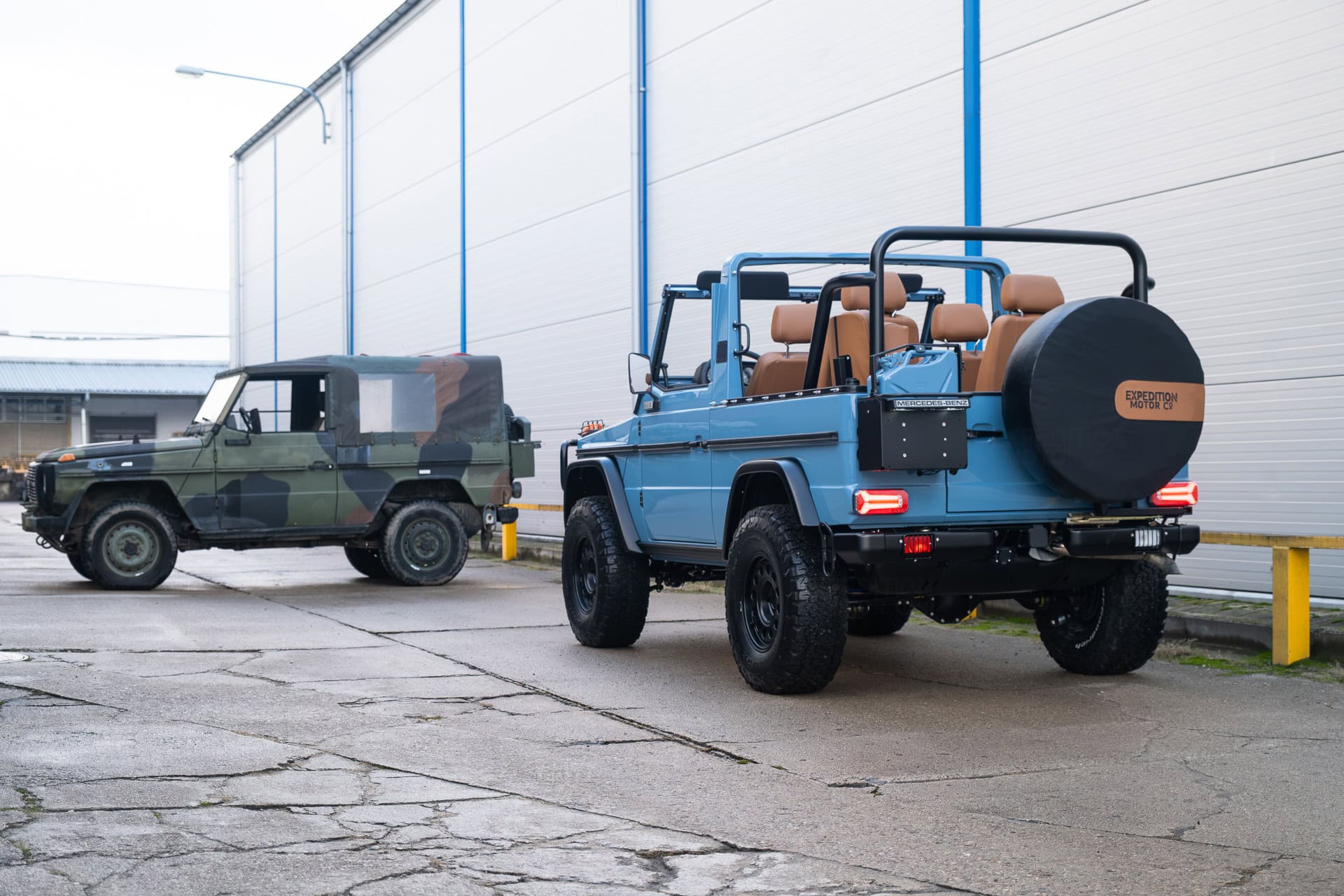
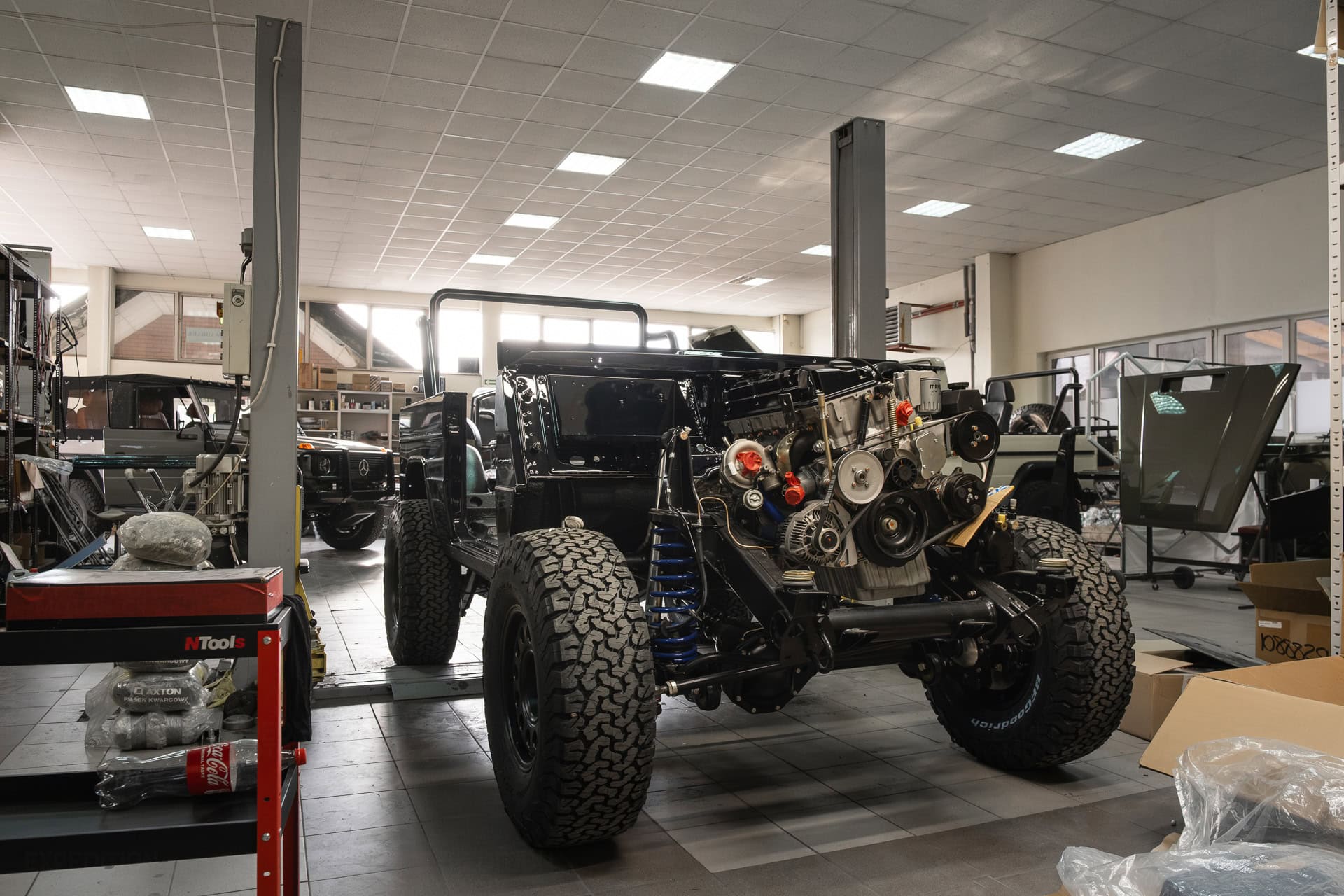
This is the vehicle we know more intimately than any other. Every EMC build starts as a genuine Wolf sourced from various NATO militaries, and stripping one to the frame is an education in why the platform earned its reputation. The engineering is plain to see once the body comes off: a chassis designed to be serviced in the field, drivetrain components specified with wide margins, and a body structure that tolerates decades of use. Our restoration returns each truck to better-than-original condition across more than 2,500 man-hours, with upgrades like the OM606 Turbodiesel available for clients who want more power without leaving the engine family the truck was born with.
The Wolf is also the purest surviving expression of the original name. It is a Geländewagen in the literal sense, a terrain vehicle built for governments that graded it on capability alone, and its 2 Door G Wagon soft-top configuration is the body style closest to the 1979 original.
The Name Today

Few automotive names have traveled as far from their origins while remaining accurate. The modern G-Class is a luxury product, but it still rides on a ladder frame, still uses the silhouette drawn in Graz, and is still built in the same city. The word Geländewagen survives because the vehicle never stopped honoring it.
Our work sits at the intersection of the name's two lives. Each restored Wolf is an old G Wagon in the truest sense, a military-issue W461 with documented provenance, rebuilt entirely in-house by our team of 26 craftsmen. The trucks leave our shop with modern comfort, reliability, drivability, and with the character that made the name mean something in the first place.
To see current and past examples of our work, visit our restored builds page, or begin specifying your own in the Wolf Builder.
